Your weekly poem: SONG OF MYSELF

Your weekly poem: SONG OF MYSELF

🌿 A poem a day keeps the blues away… 

A Song of Myself

— in memory of Liz, aka Baba (1938 – 2026)

🌻 1

I celebrate myself, and sing myself,
And what I assume you shall assume,
For every atom belonging to me as good belongs to you.

I loafe and invite my soul,
I lean and loafe at my ease observing a spear of summer grass.

My tongue, every atom of my blood, form’d from this soil, this air,
Born here of parents born here from parents the same, and their parents the same,
I, now thirty-seven years old in perfect health begin,
Hoping to cease not till death.

Creeds and schools in abeyance,
Retiring back a while sufficed at what they are, but never forgotten,
I harbor for good or bad, I permit to speak at every hazard,
Nature without check with original energy.

5

I believe in you my soul, the other I am must not abase itself to you,
And you must not be abased to the other.

Loafe with me on the grass, loose the stop from your throat,
Not words, not music or rhyme I want, not custom or lecture, not even the best,
Only the lull I like, the hum of your valvèd voice.
(…)

Swiftly arose and spread around me the peace and knowledge that pass all the argument of the earth,
And I know that the hand of God is the promise of my own,
And I know that the spirit of God is the brother of my own,
And that all the men ever born are also my brothers, and the women my sisters and lovers,
And that a kelson of the creation is love,
And limitless are leaves stiff or drooping in the fields,
And brown ants in the little wells beneath them,
And mossy scabs of the worm fence, heap’d stones, elder, mullein and poke-weed.

6

(…)
The smallest sprout shows there is really no death,
And if ever there was it led forward life, and does not wait at the end to arrest it,
And ceas’d the moment life appear’d.

All goes onward and outward, nothing collapses,
And to die is different from what any one supposed, and luckier.

7

Has any one supposed it lucky to be born?
I hasten to inform him or her it is just as lucky to die, and I know it.

I pass death with the dying and birth with the new-wash’d babe, and am not contain’d between my hat and boots,
And peruse manifold objects, no two alike and every one good,
The earth good and the stars good, and their adjuncts all good.

I am not an earth nor an adjunct of an earth,
I am the mate and companion of people, all just as immortal and fathomless as myself,
(They do not know how immortal, but I know.)
(…)

Undrape! you are not guilty to me, nor stale nor discarded,
I see through the broadcloth and gingham whether or no,
And am around, tenacious, acquisitive, tireless, and cannot be shaken away.

51

The past and present wilt—I have fill’d them, emptied them,
And proceed to fill my next fold of the future.

Listener up there! what have you to confide to me?
Look in my face while I snuff the sidle of evening,
(Talk honestly, no one else hears you, and I stay only a minute longer.)

Do I contradict myself?
Very well then I contradict myself,
(I am large, I contain multitudes.)

I concentrate toward them that are nigh, I wait on the door-slab.

Who has done his day’s work? who will soonest be through with his supper?
Who wishes to walk with me?

Will you speak before I am gone? will you prove already too late?

52

(…)

The last scud of day holds back for me,
It flings my likeness after the rest and true as any on the shadow’d wilds,
It coaxes me to the vapor and the dusk.

I depart as air, I shake my white locks at the runaway sun,
I effuse my flesh in eddies, and drift it in lacy jags.

I bequeath myself to the dirt to grow from the grass I love,
If you want me again look for me under your boot-soles.

You will hardly know who I am or what I mean,
But I shall be good health to you nevertheless,
And filter and fibre your blood.

Failing to fetch me at first keep encouraged,
Missing me one place search another,
I stop somewhere waiting for you. 🌻

—Walt Whitman (1819 – 1892)


🪴 Walt Whitman’s poem is made up of 52 numbered sections. I’ve included a link in the comments to the full poem. It’s a beautiful testament to life and what it means to live, to die, and to live once more…

I’ve chosen the sections below because I think Liz, called Baba by those closest to her, would like them especially.

🪴 Section 1 sets the tone right away:

🌱 I celebrate myself, and sing myself,
And what I assume you shall assume,
For every atom belonging to me as good belongs to you.

Whitman opens with self-affirmation, only to immediately state that his self is not separate from his reader’s. This is not just Whitman’s song, it belongs to every one of us, including you and me. His “I” is also our “I”.

📌 So, I invite you, just as I would invite Baba, to say these words out loud—right now—with power and determination:

I celebrate myself, and sing myself.
I loafe and invite my soul

🌱 Whitman goes on to celebrate where he came from: the lineage that was, and the lineage that will be…

He acknowledges the importance of what he’s learned throughout his life. But while they’re “never forgotten”, he’s not defined by them. He fully owns and celebrates who and what he is, in all its facets, “good or bad”. He allows his soul to speak his truth “at every hazard”, unfiltered, uncensored… “nature without check with original energy”.

Baba was a proud, independent Scotswoman. Her dad was a philologist and academic, and she too became a linguist. She and I shared a love and passion for books, especially old books. She had inherited an amazing collection of antique books from her dad, which (upon her request) I was helping her donate to the University of Basel antique book collection.

I don’t know how Baba was as a young woman, but as I got to know her, I appreciated her wit and her sharp, uncensored mind. She wore her heart on her sleeve, and I loved that about her. Simple and direct. It’s a breath of fresh air to sit with someone who is not tongue-tied by what’s woke or politically correct or appropriate. And there was never any maliciousness in whatever she shared. She just spoke her mind and was always open for a good debate.

🪴 Sections 5, 6 & 7 are closely connected:

🌱 I believe in you my soul, the other I am must not abase itself to you,
And you must not be abased to the other.

The body needs the soul, and the soul needs the body. Both are equal in importance, and neither should demean the other… Like in the rest of his poem, he is inviting us to embrace the duality of our existence: physical and spiritual.

🌱 Loafe with me on the grass, loose the stop from your throat,
Not words, not music or rhyme I want, not custom or lecture, not even the best,
Only the lull I like, the hum of your valvèd voice.

He then invites us to relax with him on the grass and loosen ourselves up; lose all the “shoulda, woulda, coulda”s, the competitions, the comparisons… and allow ourselves to be whatever wants to be.

Baba carried a number of “should”s—don’t we all… She also loved to talk about her dad. She was so incredibly proud of his own publications, which she shared with me. And she so dearly cared about his book collection. Her home was littered with books—on numerous shelves in the living room, bedroom, office room, and a gazillion of boxes, stacked on top of each other, all full of books as well. 80% of which were her dad’s. As much as she loved those books, I could tell how they weighed like a heavy burden on her chest—the responsibility to find them a new home before she leaves this one…

🌱 The smallest sprout shows there is really no death, (…)
All goes onward and outward, nothing collapses,

And to die is different from what any one supposed, and luckier.

Whitman goes on to celebrate every living thing as God’s creation, and part of ourselves just as we are a part of it. And he reminds us that “there is really no death” in one of his most iconic and reassuring philosophical declarations.

Most people know Whitman by his famous verse in section 51, which I’ll get to in a moment. But I’d love for you to bask, just for a minute, in the sun of his belief: there is no such thing as death, only transformation.

But how could one consider death lucky?

He explains that in section 7—not in any suicidal way, on the contrary. He declares his core belief in the immortality of the human soul and the universal equality of all people. We are not defined by our physical “casings”—our “hat and boots”.

And he tells us, even if we don’t believe it, or maybe temporarily forgotten it—too distracted by daily life, doom scrolling, and number of likes—

he hasn’t, trusting that his belief may be enough to sustain us, at least for a while…

🌱 Undrape! you are not guilty to me, nor stale nor discarded,
I see through the broadcloth and gingham whether or no, 

Take off those masks and societal garments that are meant to dictate our roles. We are neither broken nor bound to whatever limits others have set upon us…

To his human poetic heart, he sees through our façades and loves and accepts everyone as they are.

When Baba was assigned a social worker, the latter interviewed people who knew her about her character, and she showed me the reports. It angered me that her family doctor depicted her as stubborn, distant, and aloof. That couldn’t be further from the truth—and says more about her doctor than Baba. Society has a tendency to treat its elderly like children—they are not! And when we do, we shouldn’t be surprised if they defy us, act “stubborn”, or start protecting their boundaries by keeping a distance. I’ve known Baba as funny, witty, and compassionate. She enjoyed a hug, a kiss on the cheek, and when she smiled, her whole face shone like a sun.

🌱 And am around, tenacious, acquisitive, tireless, and cannot be shaken away.

Earlier, he positioned himself as a companion to his readers and now he confirms his promise to us: he is “around, tenacious, acquisitive, tireless, and cannot be shaken away”.

Who wouldn’t want someone like that by their side—a true friend, an omnipresent force of love and acceptance…

I think each one of us comes in and out of people’s lives for a season, for a reason.

I first met Baba at my local supermarket four years ago. Her body was already quite frail back then, and I noticed how she was struggling to walk and carry her grocery basket, so I approached her and offered to help her shop. I then helped her pack her groceries and offered to take them home with her—turns out she lived ten minutes away by foot from the store.

I left her my phone number in case she ever needed help again. She lived alone: no partner, no children, no family nearby, and no friends.

Sometime later, she called me to help her with some more shopping. Then it was to go pay her bills at the post office counter. And a friendship ensued.

After a while, dementia started getting hold of her, and she would call me telling me she has no food and no money to buy any. So, I would go to her, shop for her, and call the social worker to make sure she got the help she needed.

🪴 Section 51 holds one of Whitman’s most famous quotes.

But before I get to it, he opens the section with a confession:

🌱 The past and present wilt—I have fill’d them, emptied them,
And proceed to fill my next fold of the future.

Whitman has lived a complete and full life, and he’s not done yet… and he is inviting us in. Time is short, so let’s not waste it on superficial talk.

🌱 (Talk honestly, no one else hears you, and I stay only a minute longer.)

And now comes one of the most famous passages in American literature:

🌱 Do I contradict myself?
Very well then I contradict myself,
(I am large, I contain multitudes.)

By now, Whitman has written 50 rich sections in which he’s shifted his tone, held opposing views, and here he is, in true Gestalt fashion, embracing his polarities.

(I am large, I contain multitudes.)

📌  Say it out loud with me—right now—like before.

And as you read this line out loud: own it! Believe it!
Stand up as you say it.
Go outdoors, or at least look out your window.
Open your arms.
Look up to the sky.
And say it out lo

“I am large, and I contain multitudes.”

I, too, contain multitudes, and so did Baba. I wish I had known her when she was younger. Her love for the written word, linguistics, history and music inspired me.

🪴 And then comes the end—of the poem, but also one’s life: Section 52

🌱 I depart as air, I shake my white locks at the runaway sun

Whitman knows that his life will inevitably come to an end, and he’s not scared. He’s ready for it. Ready for his transformation.

And he consoles us that he won’t be too far away…

🌱 But I shall be good health to you nevertheless,
And filter and fibre your blood.
Failing to fetch me at first keep encouraged,
Missing me one place search another,
I stop somewhere waiting for you.

Just like Whitman, Baba lives on.

She lives in my memory and within everyone who has known her and loved her.
She lives on in the students she taught and the knowledge she imparted.
She lives on in the books she so lovingly kept and gifted.
She lives on in spirit, “waiting for you” and me to join her one day…

So…

📌 What multitudes do you contain? How are you embracing them?

📌 What do you need to “Undrape!”? What “stop” do you need to “loosen from your throat”?

📌 Who are you to someone: “around, tenacious, acquisitive, tireless, and cannot be shaken away from”?


🦋 Happy weekend everyone! 🦋

With love,
Dina 🫶🏽
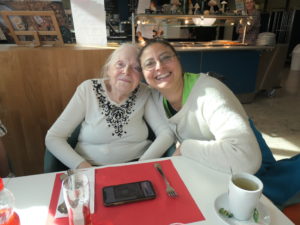
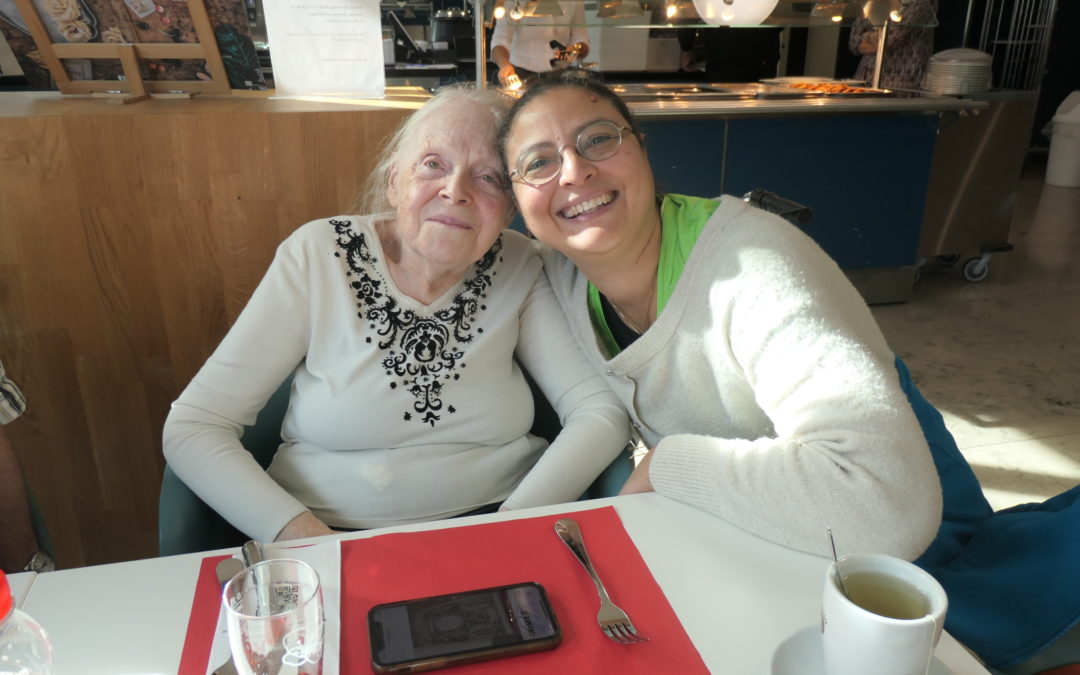
Liz Baby and Dina Sabry Fivaz

Photo of me and Baba a week after she moved into the neighbourhood’s elderly home. She passed away eight months later, on Friday 29 May 2026.

Resources:

  • Curious about Whitman’s full poem—all 52 sections of them? Check it out here.
  • This week’s song is A SONG FOR YOU performed by Donny Hathaway—I can imagine Liz would have loved it:

Your weekly poem: THE RETURN

Your weekly poem: THE RETURN

🌿 A poem a day keeps the blues away… 

THE RETURN

or our awakening to what truly matters…

🌻 The deed took all my heart.
I did not think of you,
Not till the thing was done.
I put my sword away
And then no more the cold
And perfect fury ran
Along my narrow bones
And then no more the black
And dripping corridors
Hold anywhere the shape
That I had come to slay.
Then for the first time,
I saw in the cave’s belly
The dark and clotted webs,
The green and sucking pools,
The rank and crumbling walls,
The maze of passages.

And I thought then
Of the far earth,
Of the spring sun
And the slow wind,
And a young girl,
And I looked then
At the white thread.

Hunting the minotaur
I was no common man
And had no need of love.
I trailed the shining thread
Behind me, for a vow,
And did not think of you.
It lay there, like a sign,
Coiled on the bull’s great hoof.
And back into the world,
Half blind with weariness
I touched the thread and wept.
O, it was frail as air.

And I turned then
With the white spool
Through the cold rocks,
Through the black rocks,
Through the long webs,
And the mist fell,
And the webs clung,
And the rocks tumbled,
And the earth shook.

And the thread held. 🌻

— Mary Oliver, from New and Selected Poems Vol. 1, 1992

🪴  In her poem “The Return”, Oliver references the Greek myth of Theseus who enters the labyrinth to kill the Minotaur, and is given by Ariadne, a Cretan princess who loves him, a ball of white thread to mark his path so he can find his way out again.

Oliver writes from Theseus’s perspective and takes us through four emotional stages:

1) The Killing

The deed took all my heart.
I did not think of you,
Not till the thing was done.

🌱  Oliver never describes the actual killing of the Minotaur. Her poem starts right after the deed was done. At this point, Theseus realises how his goal had consumed him entirely—eaten him up—and made him forget all that he once cared about… The deed took all my heart.

2) The Awakening

I put my sword away
And then no more the cold
And perfect fury ran
Along my narrow bones

🌱  Only once he put his sword away did the cold and “perfect fury” drain from his bones, and with it gone, he becomes human again. It’s like his whole body comes back to life, and he wakes up to his surroundings and sees the labyrinth for what it is: cold, dark, with clotted webs and crumbling walls.

Then for the first time,
I saw

🌱  I love this line so much! So simple, and yet so powerful. Made me think of the hymn Amazing Grace: “was blind and now I see”.

As he wakes up from his trance, he not only sees his surroundings for the first time, he also remembers all the important things outside the cave: the earth, the sun, the wind, the young woman—his love.

I think this line also resonated with me because, as a Gestalt coach, awareness is everything. My only goal is to find ways to expand my client’s sense of awareness, exactly for that reason! Because once we become fully aware of what is, we start seeing possibilities we never thought existed. We start recognising choices, that were always there, but outside our angle of sight. Then for the first time, I saw…

And I looked then
At the white thread.

🌱  As he regains his awareness, he also regains sight of his “salvation”—his way out: the white thread his love had given him to find his way back. Consumed by his goal, his narrow focus closed him off from everything else.

But now that the deed was done, and the sword put away, he can see more clearly.

3) The Confession

Hunting the minotaur
I was no common man
And had no need of love.

🌱  Theseus admits to himself and to his love that while he was consumed by his mission, love had no place in his life. It’s as though his mission temporarily stripped him of his own humanity…

And then comes his most vulnerable confession:

I trailed the shining thread
Behind me, for a vow,
And did not think of you.

🌱  For a moment, all the thread was to him was a tool, a means to an end. In Martin Buber’s words, his relationship to Ariadne had become a purely utilitarian one: an I/It relationship for he “did not think of (her)”.

4) The Return

And back into the world,
Half blind with weariness
I touched the thread and wept.
O, it was frail as air.

🌱 Half blind with exhaustion, he touches the thread and weeps. He realises how this thread is his lifeline. This thin thread, as “frail as air”: how easily it could have broken; how little he had valued it while he was consumed by his goal; how wrong it could all have gone… And yet here it is, the thread, as faithful to its vow as the person who gave it to him—ready to lead him out of the darkness back into the world.

And I turned then

🌱  Fully aware and conscious, Theseus makes a clear, decisive choice: he turns.

He turns around and follows the thread, on what looks like a long journey out, through the rocks and the webs and the chaos…

And the thread held.

🌱  Frail as air as it was, it held.

It fulfilled its vow and promise to see him through, back into the light; back to his loved one; back to life.


So…

📌  How often do we too, like Theseus, find ourselves consumed by our goals—so much so—that we lose track of ourselves, of the ones we love, and of the things that truly matter?

📌  What sword are you and I holding today? What fight are we pursuing? What would happen if we, too, laid our sword down? What might come back to life that lain dormant all this time we’ve been blindly pursuing that goal?

📌  What thread, what lifeline, have you and I been given? What is it attached to? What does it want to lead us in or out of? When will we, too, touch it, and weep, and allow it to lead the way?


🦋 Happy weekend everyone! 🦋

With love,
Dina 🫶🏽

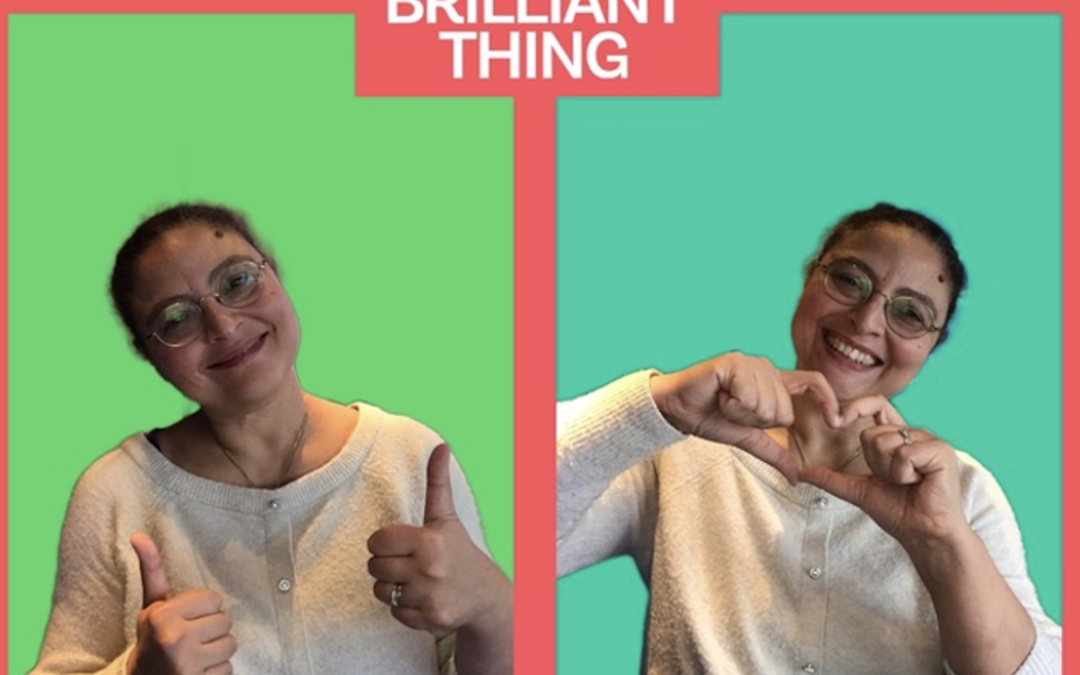
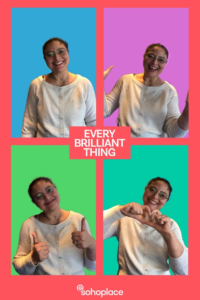
Dina Sabry Fivaz at Sohoplace attending the play Every Brilliant Thing

Image of me at Sohoplace theatre, attending the wonderful play “Every Brilliant Thing”—a play about a seven-year-old who starts a list of everything worth living for, to help his mum find her way back to life: his own gift of white thread to the one he loves most…

Resources:

  • You can read last week’s poem “The Way It is” by William Stafford here

  • This week’s song is AMAZING GRACE, performed by the Soweto Gospel Choir

Your weekly poem: THE WAY IT IS

Your weekly poem: THE WAY IT IS

🌿 A poem a day keeps the blues away… 

THE WAY IT IS

or our life’s thread…

🌻 There’s a thread you follow. It goes among
things that change. But it doesn’t change.
People wonder about what you are pursuing.
You have to explain about the thread.
But it is hard for others to see.
While you hold it you can’t get lost.
Tragedies happen; people get hurt
or die; and you suffer and get old.
Nothing you do can stop time’s unfolding.
You don’t ever let go of the thread.🌻

— William Stafford, from Ask Me: 100 Essential Poems, 2014

🪴 I heard about this poem on the Association for Coaching’s newest podcast on “Coaching Men” hosted by the wonderful Rob Lawrence (you can find the link to the podcast in the “Resources” section below). His guest, Will Johnson, is as big a fan of poetry as I am and referenced it, so I got curious.

There’s a thread you follow. It goes among
things that change. But it doesn’t change.

🌱 It’s a faithful thread.
I imagine the thread to be fine, sometimes fragile, yet sturdy.
It’s faithful and reliable; for no matter the circumstances, no matter the landscapes it crosses, no matter the seasons, “it doesn’t change”

🌱 It’s a guiding thread.
It’s a thread I follow. It shows me the way, guides my steps, informs my decisions. And because it’s faithful no matter the circumstances, I know it can show me the way *in* as well as the way *out* when I need it.

People wonder about what you are pursuing.
You have to explain about the thread. 
But it is hard for others to see.

🌱 It’s a personal thread, unique to me just as I am unique to the world.

People may not always understand my reasons, the paths I choose, the decisions I make—they do not see what I see, because my path is not their path—and that’s OK.

While you hold it you can’t get lost.
Tragedies happen; people get hurt
or die; and you suffer and get old.

🌱 Its promise of guiding us comes with a pre-condition: “Hold it”!
And if we’re weathering a storm—be it in our surrounding (external) or within us, the tighter that grip needs to be.

Nothing you do can stop time’s unfolding.

🌱 Doris Day’s “Que sera sera” comes to mind. There’s only so much in life we can control, predict, anticipate. There’s only so much risk management one can do. Life is made of complex intricacies; things we never anticipated; reactions we could have never predicted; connections we could have never foreseen; events that connect in ways that astound us…

So the only thing left for us to do is:

**You don’t ever let go of the thread.**

📌 What thread do you recognize in your life?

Are you holding it right now?
How close to the thread are you walking? Is it even in sight?
Was there a time when you let go of it?

🦋 Happy weekend everyone! 🦋

With love,
Dina 🫶🏽

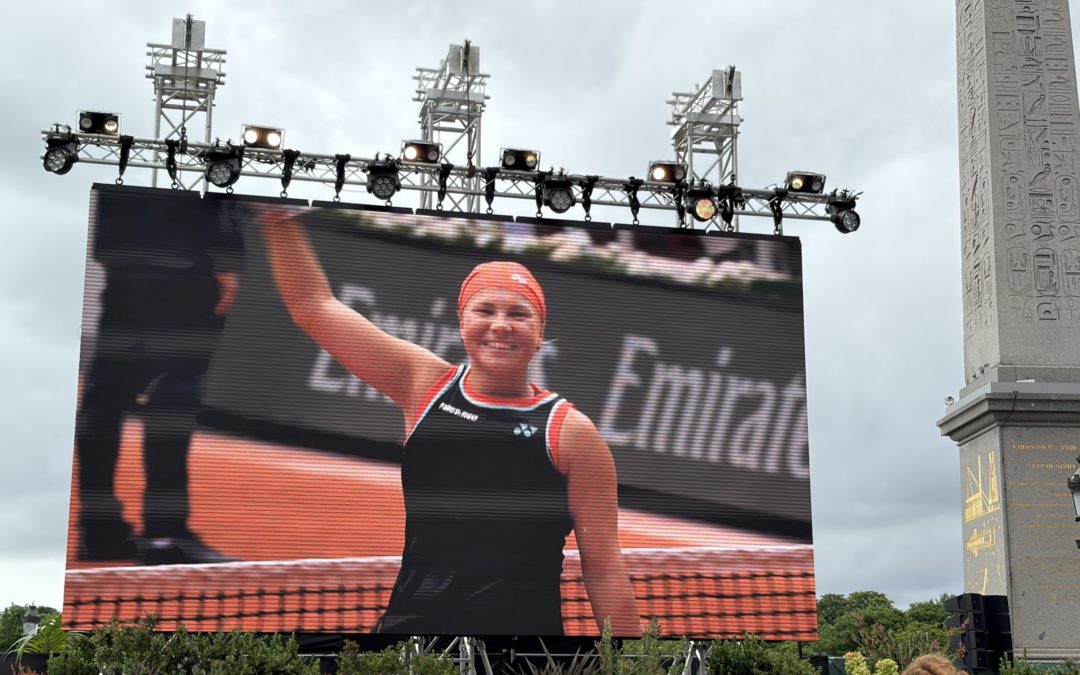
Shnaider winning quarter final at Roland Garros 2026

Image of Shnaider landing that final strike that won her the quarter final against Sabalenka—taken at Place de la Concorde during my stay in Paris this week. An unexpected result, and I’m guessing a certain “thread” had something to do with it…

Resources:

Your weekly poem: ON CHILDREN & PARENTING

Your weekly poem: ON CHILDREN & PARENTING

🌿 A poem a day keeps the blues away… 

ON CHILDREN & PARENTING

🌻 Your children are not your children.
They are the sons and daughters of Life’s longing for itself.
They come through you but not from you,
And though they are with you yet they belong not to you.

You may give them your love but not your thoughts,
For they have their own thoughts.
You may house their bodies but not their souls,
For their souls dwell in the house of tomorrow, which you cannot visit, not even in your dreams.
You may strive to be like them, but seek not to make them like you.
For life goes not backward nor tarries with yesterday.
You are the bows from which your children as living arrows are sent forth.
The archer sees the mark upon the path of the infinite, and He bends you with His might that His arrows may go swift and far.
Let your bending in the archer’s hand be for gladness;
For even as He loves the arrow that flies, so He loves also the bow that is stable. 🌻

— Kahlil Gibran (1883-1931), from The Prophet

🪴 Last Sunday was Mother’s day. In my household, it tends to be a day like any other, which I don’t mind. In fact, the two people who wished me Happy Mother’s Day “proactively” were my friends Andy, Maryam, & my mum’s dentist, who had kindly offered to do a check-up on his day off after her operation…

🪴 As I was reflecting on parenthood, I found myself drawn back to Gibran’s words—a wise reminder of what it means to be entrusted with a life.

I love being a mum to my wonderful 16-year-old. It’s the most important and precious role I’ll ever get to play, and I’m immensely grateful for it—all the more so because I’m well aware that there are countless people who would love to be a parent but can’t. I was almost one of them… until I wasn’t.

🪴 Reflecting on what it means to be a parent also reminded me of all the important parental figures I had growing up. People I knew I could rely on, and who were always there for me, especially when my parents couldn’t. Sometimes without a family of their own, they became my parent and I their child all the same—not by blood, but by extension, by choice, through love. These wonderful souls also deserve to be celebrated!

🪴 I also believe in celebrating our children—every day! For the person they are the moment they’re born. For the person they become as they grow, learn, and explore. For every step they take, every fall they make, and as they stand up again.

I celebrate my daughter for the fresh perspective she brings—those youth-tainted glasses she wears that remind me of a time that was and of all that can be. The joy and pain of every first. The discovery of life’s promises. The carving of her own path into the world.

It’s an enormous privilege to witness a child’s journey—whether they are our own or not.

🎉 Today, I celebrate you and all your loved ones! 🎉 

🦋 Happy parent day ! Happy children day ! Happy Friday everyone! 🦋

With love,

Dina 🫶🏽

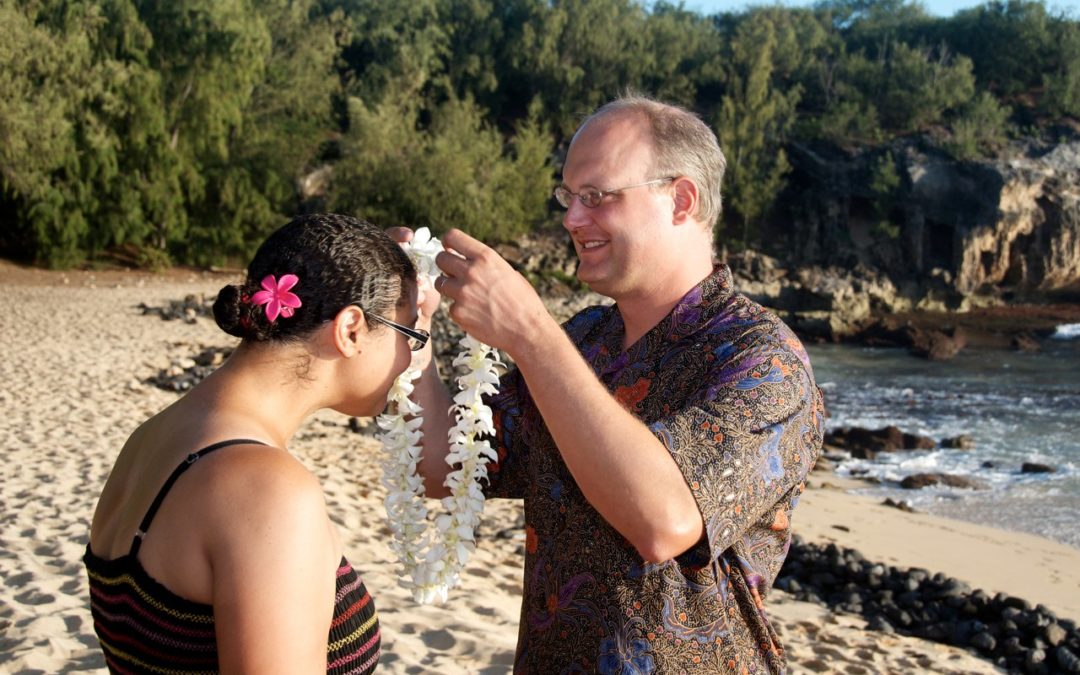
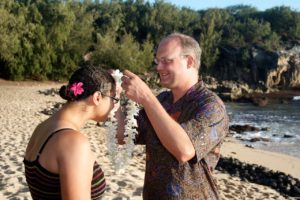
Image: My husband and I in Hawaii, 2012, renewing our vows a year and a half after our daughter was born.

Resources:

  • In celebration of YOU and all your loved ones, this week’s song is CELEBRATION by Kool & The Gang

Your weekly poem: WHY I WAKE EARLY

Your weekly poem: WHY I WAKE EARLY

🌿 A poem a day keeps the blues away… 

WHY I WAKE EARLY

🌻 Hello, sun in my face.
Hello, you who make the morning
and spread it over the fields
and into the faces of the tulips
and the nodding morning glories,
and into the windows of, even, the
miserable and crotchety–

best preacher that ever was,
dear star, that just happens
to be where you are in the universe
to keep us from ever-darkness,
to ease us with warm touching,
to hold us in the great hands of light–
good morning, good morning, good morning.

Watch, now, how I start the day
in happiness, in kindness. 🌻

— Mary Oliver
(published in “Devotions: The Selected Poems of Mary Oliver”)

🪴 I haven’t posted a poem for a few weeks now. Life has been life, I guess, with its usual ebbs and flows. As I finally sat down to share with you a poem, I picked Mary Oliver’s book and it opened on page 171, revealing WHY I WAKE EARLY.

🪴 I think any analysis of Oliver’s words would defeat the whole purpose of this simple but powerful poem. It’s not just an ode to the sun, but an ode to our planet and the beauty that surrounds us. And it’s meant to be experienced rather than analysed.

🎂 I find it interesting that this is the poem that revealed itself to me today (Friday 08 May), the same day we celebrate Sir David Attenborough’s 100th birthday: someone who has dedicated his life to sharing the wonders of our beautiful planet with millions of viewers in a most iconic way. 

📌 So, instead of a question, I invite you to wake up early tomorrow and experience the wonder that is “morning” through all your senses.

🎂 Happy 100th Birthday Sir David Attenborough 🎂

🦋 Happy Friday everyone! 🦋

🌹 And Happy Mother’s day (on Sunday)! 🌹

With love,

Dina 🫶🏽

Resources:

  • This week’s song is What A Wonderful World, cover by Sir David Attenborough—an ode to our planet

Your weekly poem: ALONE—or no man’s an island?

Your weekly poem: ALONE—or no man’s an island?

🌿 A poem a day keeps the blues away… 

On this blessed Good Friday, Maya Angelou’s poem ALONE came to mind.

ALONE

🌻 Alone
Lying, thinking
Last night
How to find my soul a home
Where water is not thirsty
And bread loaf is not stone
I came up with one thing
And I don’t believe I’m wrong
That nobody,
But nobody
Can make it out here alone.

Alone, all alone
Nobody, but nobody
Can make it out here alone.

There are some millionaires
With money they can’t use
Their wives run round like banshees
Their children sing the blues
They’ve got expensive doctors
To cure their hearts of stone.
But nobody
No, nobody
Can make it out here alone.

Alone, all alone
Nobody, but nobody
Can make it out here alone.

Now if you listen closely
I’ll tell you what I know
Storm clouds are gathering
The wind is gonna blow
The race of man is suffering
And I can hear the moan,
‘Cause nobody,
But nobody
Can make it out here alone.

Alone, all alone
Nobody, but nobody
Can make it out here alone.🌻

—Maya Angelou


Creative, resourceful, and whole

🪴 There’s a persistent belief in coaching—not sure where it originated—that clients are creative, resourceful, and whole.

I always struggled with that mantra, but it took me some time to figure out why.

It sounds amazing, and it’s one of those mantras we sure as heck want to be true. But the question is, is it?

Creativity and resourcefulness sit on a continuum—some have it more than others. But I do believe that we all carry a seed of both. How that seed develops, and how it shows up in action, will greatly vary…

Wholeness, on the other hand, is rooted in this modern-day thinking that we can be anything we want to be, and do anything we want to do, all on our own, if we only put our mind to it. Bollocks. No man is an island. And no talents are infinite.

Relational coaching practices try to tone this idea down by acknowledging the importance of the coach-client relationship, and the coach’s use-of-self as an instrument of change. And yet, we still hold on to the idea of “wholeness” as an individual trait, rather than a communal one.

Why are we so afraid to admit that each one of us has limits?
That no one can be everything to everyone.
That my talents have limits.
My creativity has limits.
My resourcefulness has limits.
My knowledge has limits.
My resilience has limits.

And once we accept that—that we, human beings, have limits—we start to understand that we can only become WHOLE with one another.

“No human being is ‘whole’ in and of itself”

🪴 And I’m not the first one to propose such a sacrilegious hypothesis. I attended a brilliant webinar on existential analysis by Kate Hammer earlier this year, in which she shared the following quote by existential clinical psychologist, psychotherapist, and close collaborator of Viktor Frankl—Alfried Längle, who said:

“According to existential analysis no human being is ‘whole’ in and of itself, even if healthy and with all drives satisfied. A human being as a person needs to transcend themselves and to turn to others (people, projects, tasks) in order to achieve existential fulfilment.”

Imagine my relief when I realised I wasn’t alone in my thinking. Which in itself proves Angelou’s point:

We need one another. We complement one another. We build on one another. We nurture one another. We protect one another. Fill in the blanks…

“Alone, all alone
Nobody, but nobody
Can make it out here alone.”

🪴 In today’s world, with the fires blazing across my beloved Middle East, Maya’s words pierce through the silence:

“Storm clouds are gathering
The wind is gonna blow
The race of man is suffering
And I can hear the moan,
‘Cause nobody,
But nobody
Can make it out here alone.”

Man is no island. Mankind is a highly sophisticated root system—similar to the mycorrhizal network—a Wood Wide Web—or in our case, a Soul Wide Web: connected, woven like a tapestry. Because when it tears somewhere, everyone hurts…

📌 Your turn… 

  • What do you know to be your limits?
  • Who completes you? Go and be with them!
  • What completes you? Go and do it!

🦋 A blessed Good Friday everyone! 🦋

With love,

Dina 🫶🏽


PS : all em dashes are my own ;).

Resources:

  • This week’s song is The Power of Love, cover by Josh Krajcik